
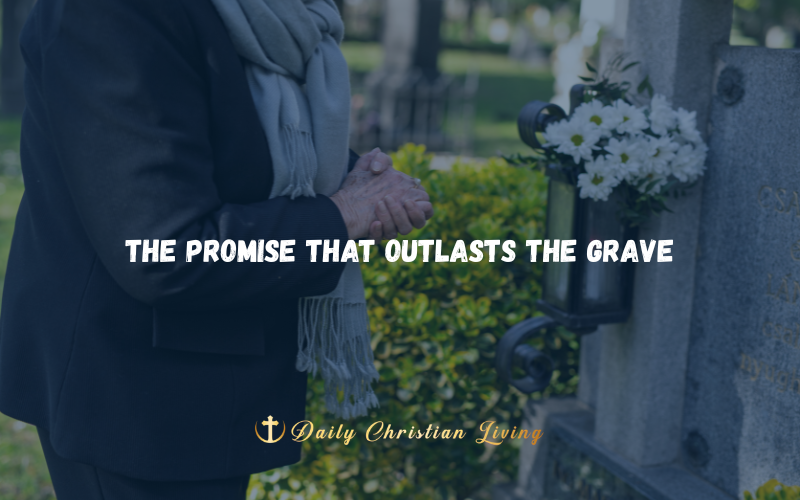
There is a valley every believer must walk through. It may be the valley of a devastating diagnosis, a fractured relationship, or grief so heavy it presses the air from your chest. David knew this valley well. A fugitive king, hunted and betrayed, he described it in language that has comforted God’s people for three thousand years:
Psalm 23:4 “Yea, though I walk through the valley of the shadow of death, I will fear no evil: for thou art with me; thy rod and thy staff they comfort me.”
The Hebrew phrase David uses for “shadow of death” is tsalmaveth (צַלְמָוֶת), a compound word that fuses “shadow” and “death” into a single, suffocating image. It describes the deepest, darkest gloom imaginable—the kind of darkness where death feels close enough to touch.
And yet David does not say he avoids that valley. He walks through it. The valley has an entrance and an exit, because God is with him in the middle of it.
But here is what makes this passage even more remarkable. Centuries before the cross, David’s shepherd psalm was already pointing forward to a greater Shepherd who would walk through that valley Himself—and come out the other side.
The Old Testament is filled with these divine whispers, shadows cast by a coming Light. And perhaps no passage captures the cost of that journey more vividly than Isaiah’s prophecy:
Isaiah 53:5 “But he was wounded for our transgressions, he was bruised for our iniquities: the chastisement of our peace was upon him; and with his stripes we are healed.”
Written seven hundred years before Calvary, Isaiah’s words describe the crucifixion with the precision of an eyewitness. The Messiah would be wounded, bruised, chastised, and striped—not for His own sins, but for ours. The Old Testament didn’t just hint at what Jesus would do. It painted the picture in vivid, blood-red detail.
As we approach Resurrection Sunday, these ancient texts invite us to trace the scarlet thread that runs from Genesis to Revelation—a thread that ties every sacrifice, every prophecy, and every promise to the empty tomb outside Jerusalem. The promise that outlasts the grave did not begin on Easter morning. It began in the heart of God before the foundation of the world.
What Did the Old Testament Reveal About the Coming Savior?
Long before the angel rolled the stone away, God wove the promise of resurrection into the fabric of the Old Testament. From the Psalms to the Prophets, Scripture testified that death would not have the final word over God’s Anointed—and by extension, over anyone who trusts in Him.
The depth of Isaiah 53:5 deserves careful attention. The Hebrew word for “healed” is rapha (רָפָא), a word that means to mend, to restore, to make whole. It is the same word used in Exodus 15:26 when God reveals Himself as Jehovah-Rapha—“the LORD that healeth thee.”
This healing is comprehensive. It covers the spiritual wound of sin, the emotional wound of guilt, and the relational wound of separation from God. When Isaiah says “with his stripes we are healed,” he is declaring that the Messiah’s suffering would accomplish a total restoration of what sin had broken.
Job, who endured suffering that most of us cannot fathom, arrived at a conviction that anchored his soul in the darkest season of his life:
Job 19:25–26 “For I know that my redeemer liveth, and that he shall stand at the latter day upon the earth: And though after my skin worms destroy this body, yet in my flesh shall I see God.”
Job’s faith pierced through his agony to grasp a truth that would not be fully revealed for centuries: his Redeemer was alive, and physical death was not the end of the story. That “latter day” hope is the same resurrection hope we cling to today.
The prophet Hosea adds another layer to this chorus of promise. Speaking on behalf of God, he declares:
Hosea 13:14 “I will ransom them from the power of the grave; I will redeem them from death: O death, I will be thy plagues; O grave, I will be thy destruction: repentance shall be hid from mine eyes.”
God Himself would invade the territory of the grave and ransack it. And the stunning final phrase—“repentance shall be hid from mine eyes”—means God would never change His mind about it. This rescue mission was irreversible. Once He conquered death, death would stay conquered.
These Old Testament voices form a mighty chorus, all pointing forward to a morning outside Jerusalem when the stone would be rolled away and the promise would become a Person.
Why Does Jesus Say “I Am” Instead of “I Will Be”?
When Jesus arrived in Bethany after Lazarus had been dead four days, Martha met Him with grief and a gentle rebuke: “Lord, if thou hadst been here, my brother had not died” (John 11:21). She believed in Jesus’ power, but she thought He had arrived too late. His response shattered every assumption about what resurrection means and when it applies.
John 11:25–26 “I am the resurrection, and the life: he that believeth in me, though he were dead, yet shall he live: And whosoever liveth and believeth in me shall never die. Believest thou this?”
The grammar here is explosive. Jesus does not say, “I will bring the resurrection” or “I will perform a resurrection someday.” He says, “I am the resurrection.” The Greek phrase is egō eimi (ἐγώ εἰμι)—the same divine “I AM” that echoes back to Exodus 3:14 when God revealed His name to Moses at the burning bush.
Jesus is identifying Himself as the eternal, self-existent God. Resurrection is bound up in His very being. Wherever He is, the power of resurrection is already present.
This changes everything about how we understand present struggles. Martha believed in a future resurrection—“I know that he shall rise again in the resurrection at the last day” (John 11:24). She had good theology. But Jesus expanded her understanding beyond a distant event to a present reality standing right in front of her.
The resurrection wasn’t merely something to wait for. The Resurrection was someone she already knew.
And then Jesus proved it. He stood at the mouth of that tomb, where the stench of death had already set in, and commanded: “Lazarus, come forth!” (John 11:43). A dead man obeyed. The grave clothes were still on, but life had returned because Life Himself had spoken.
This miracle was a preview of something larger. Lazarus would eventually die again. But three chapters later in John’s gospel, Jesus Himself would enter the grave—and walk out of it forever. Lazarus was resuscitated; Jesus was resurrected. Lazarus received borrowed time; Jesus conquered time itself.
How Does the Resurrection Change Our Daily Battles?
The resurrection of Christ is the most consequential event in human history, and its power reaches far beyond that first Easter morning. Paul makes a staggering declaration to the believers in Rome about what the resurrection means for every Christian right now, today:
Romans 8:11 “But if the Spirit of him that raised up Jesus from the dead dwell in you, he that raised up Christ from the dead shall also quicken your mortal bodies by his Spirit that dwelleth in you.”
The Greek word for “quicken” is zōopoieō (ζωοποιέω), meaning “to make alive, to vitalize.” It is the same word used in 1 Corinthians 15:45 to describe Christ as a “quickening spirit.” This is the language of creation power—the same force that spoke galaxies into existence and breathed life into Adam’s nostrils. And Paul says that power dwells in you if you belong to Christ.
Think about what that means for the battles you’re facing right now:
- The marriage that feels lifeless? The God who raised the dead can breathe vitality into it.
- The addiction that has held you captive for years? The same power that broke the seal on a Roman tomb can break that chain.
- The ministry that seems barren and fruitless? The One who called Lazarus out of the grave can call life out of the hardest spiritual ground.
- The grief that sits on your chest like a stone? The God who moved the stone from the tomb can lift it from your heart.
Paul reinforces this truth in his letter to the Ephesians, describing the scope of God’s resurrection power at work in believers:
Ephesians 1:19–20 “And what is the exceeding greatness of his power to us-ward who believe, according to the working of his mighty power, Which he wrought in Christ, when he raised him from the dead, and set him at his own right hand in the heavenly places.”
Paul stacks four different Greek words for power in this passage—dunamis, energeia, kratos, and ischus—as if one word could not contain the magnitude of what God unleashed at the resurrection. And that full arsenal of divine strength is directed “to us-ward who believe.” Every ounce of the power that raised Christ is available to the Christian who trusts in Him.
What Does It Mean to Be “Risen with Christ”?
The resurrection shapes our identity as believers in a way many Christians have never fully grasped. Paul writes to the Colossians with an astonishing statement about who we already are in Christ:
Colossians 3:1–3 “If ye then be risen with Christ, seek those things which are above, where Christ sitteth on the right hand of God. Set your affection on things above, not on things on the earth. For ye are dead, and your life is hid with Christ in God.”
Notice the verb tense. Paul does not say, “You will be risen with Christ.” He says you have already been raised. In God’s economy, the believer’s resurrection has already begun.
Our spirits have been made alive, our standing before God is secure, and our future glorification is so certain that Scripture speaks of it in the past tense. Ephesians 2:6 puts it even more vividly: God “hath raised us up together, and made us sit together in heavenly places in Christ Jesus.”
This identity transforms how we face the valleys David described in Psalm 23. We do not walk through the shadow of death as people hoping for a distant rescue. We walk through it as people already united with the One who conquered death. The shadow is real, but the shadow is all it is—because the substance of death has been swallowed up by the victory of Christ.
Paul’s triumphant words to the Corinthians capture this perfectly:
1 Corinthians 15:55–57 “O death, where is thy sting? O grave, where is thy victory? The sting of death is sin; and the strength of sin is the law. But thanks be to God, which giveth us the victory through our Lord Jesus Christ.”
Death has been disarmed. The grave has been emptied of its power. Sin, which gave death its lethal sting, has been paid for at the cross. And the victory is not something we earn—God gives it to us through Jesus Christ. It is a gift, wrapped in grace and sealed by the empty tomb.
How Should the Resurrection Shape the Way We Live Today?
The resurrection is the engine that drives faithful Christian living. It provides both the motivation and the power to press on through the hardest seasons of life. Paul understood this deeply, and he made the pursuit of resurrection power the defining ambition of his ministry:
Philippians 3:10 “That I may know him, and the power of his resurrection, and the fellowship of his sufferings, being made conformable unto his death.”
Paul had already met the risen Christ on the Damascus road. He had been saved for years when he wrote this. And yet he was still pressing forward to know Christ more deeply—specifically, to experience the power of His resurrection in daily life. This was a man who had been shipwrecked, beaten, and imprisoned, and his singular pursuit was more of the resurrection power that sustained him through all of it.
How do we follow Paul’s example? Consider these practical applications as we move toward Easter and beyond:
- Anchor your hope in the empty tomb. When fear and uncertainty press in—about your health, your finances, your family—return to the historical fact that Jesus Christ rose from the dead. If God can reverse death itself, no problem you face is beyond His reach. The resurrection is the supreme evidence that God keeps His promises.
- Pray with resurrection confidence. The same Spirit who raised Jesus from the dead is interceding for you right now (Romans 8:26–27). Your prayers are not floating into an empty sky. They are received by a living Savior who has already demonstrated that nothing—not sin, not death, not the grave—can stand against His purposes.
- Face your valleys with the Shepherd. David wrote Psalm 23 as a man who knew the valley from personal experience. Jesus walked through the ultimate valley—death itself—and came back. He is the Good Shepherd who has already conquered the worst thing the valley can throw at you. You are never alone in the shadow, because the Shadow-Breaker walks beside you.
- Share resurrection hope generously. This world is starving for real hope. People are drowning in anxiety, depression, and despair, and the solutions the culture offers are temporary at best. The resurrection gives you something permanent to offer. As Peter writes, “Be ready always to give an answer to every man that asketh you a reason of the hope that is in you with meekness and fear” (1 Peter 3:15).
The Promise Holds
We are just a couple weeks from Resurrection Sunday, and the promise that outlasts the grave is as powerful today as it was the moment the angel declared, “He is not here: for he is risen” (Matthew 28:6).
That promise was whispered by David in the valley, proclaimed by Isaiah centuries before the cross, demonstrated by Jesus at Lazarus’s tomb, and confirmed by the Holy Spirit who raised Christ from the dead and now dwells in every believer.
Maybe you are walking through your own tsalmaveth right now—a shadow so dark you can barely see the next step. Take heart. The same God who turned the darkest Friday in history into the most glorious Sunday morning is still bringing life from death. He has already proven that the grave cannot hold what belongs to Him.
Easter is coming. But you don’t have to wait for it. The resurrection power of Jesus Christ is available to you right now, in the middle of whatever valley you’re walking through. “Thanks be to God, which giveth us the victory through our Lord Jesus Christ” (1 Corinthians 15:57). That victory is yours. The tomb is still empty. And the promise still holds.
Easter is more than a day on the calendar. It is the reason you can face tomorrow with confidence, next week with courage, and eternity with joy. Because He lives, you live also (John 14:19).
No responses yet